By Vismar Aqua | Water Intelligence & AI Solutions
Water is life. But ensuring its safety at scale — across dozens of treatment plants, reservoirs, and distribution networks — is one of the most technically demanding challenges in modern infrastructure management. For decades, water utilities around the world have turned to one of nature’s most sensitive instruments: fish. Today, the convergence of computer vision, cloud computing, and artificial intelligence is transforming this age-old practice into a powerful, automated, and highly scalable technology. This is the story of Fish Activity Monitoring Systems (FAMS) — and how AI is pushing them further than ever before.
What Is a Fish Activity Monitoring System (FAMS)?
A Fish Activity Monitoring System, or FAMS, is an automated biomonitoring technology used to detect contamination or anomalies in water quality by observing the behaviour and survival of live fish in real time. Rather than relying solely on chemical sensors — which can only detect the specific substances they are calibrated to measure — fish respond holistically to the overall toxicological state of the water. They are, in essence, broad-spectrum biological alarms.
The core principle is elegantly simple: fish are sensitive to changes in water chemistry. When contaminants enter a water supply — whether a chemical spill, a sudden shift in chlorine concentration, heavy metals, or other toxic substances — fish respond before most instruments can register a reading. Their behaviour changes. They become agitated, cluster together, swim erratically, or in severe cases, die. A FAMS captures and interprets these signals automatically, triggering alerts so that human operators can act before contaminated water reaches consumers.
Modern FAMS installations go far beyond passive observation. They integrate cameras, sensors, automated water sampling, de-chlorination systems, cloud connectivity, and now — increasingly — artificial intelligence. The result is a continuous, 24/7 water quality sentinel that never sleeps, never blinks, and never misses an event.
Why Fish? The Science Behind Biomonitoring
The use of fish as water quality indicators has a long scientific history. Fish are highly sensitive to dissolved oxygen levels, pH changes, heavy metals such as lead, mercury, and cadmium, organophosphate pesticides, chlorine and chloramines, cyanide compounds, and many other contaminants. Their neurological and physiological responses to toxic substances are well documented and occur rapidly — often within minutes of exposure.
Compared to electronic chemical sensors, fish offer several unique advantages. First, they respond to the combined, synergistic effect of multiple contaminants simultaneously — a capability no single sensor can replicate. Second, they are sensitive to unknown or novel compounds for which no calibrated sensor exists. Third, their response is biological and holistic: if the water is harmful to aquatic life, fish will show it, regardless of the specific cause.
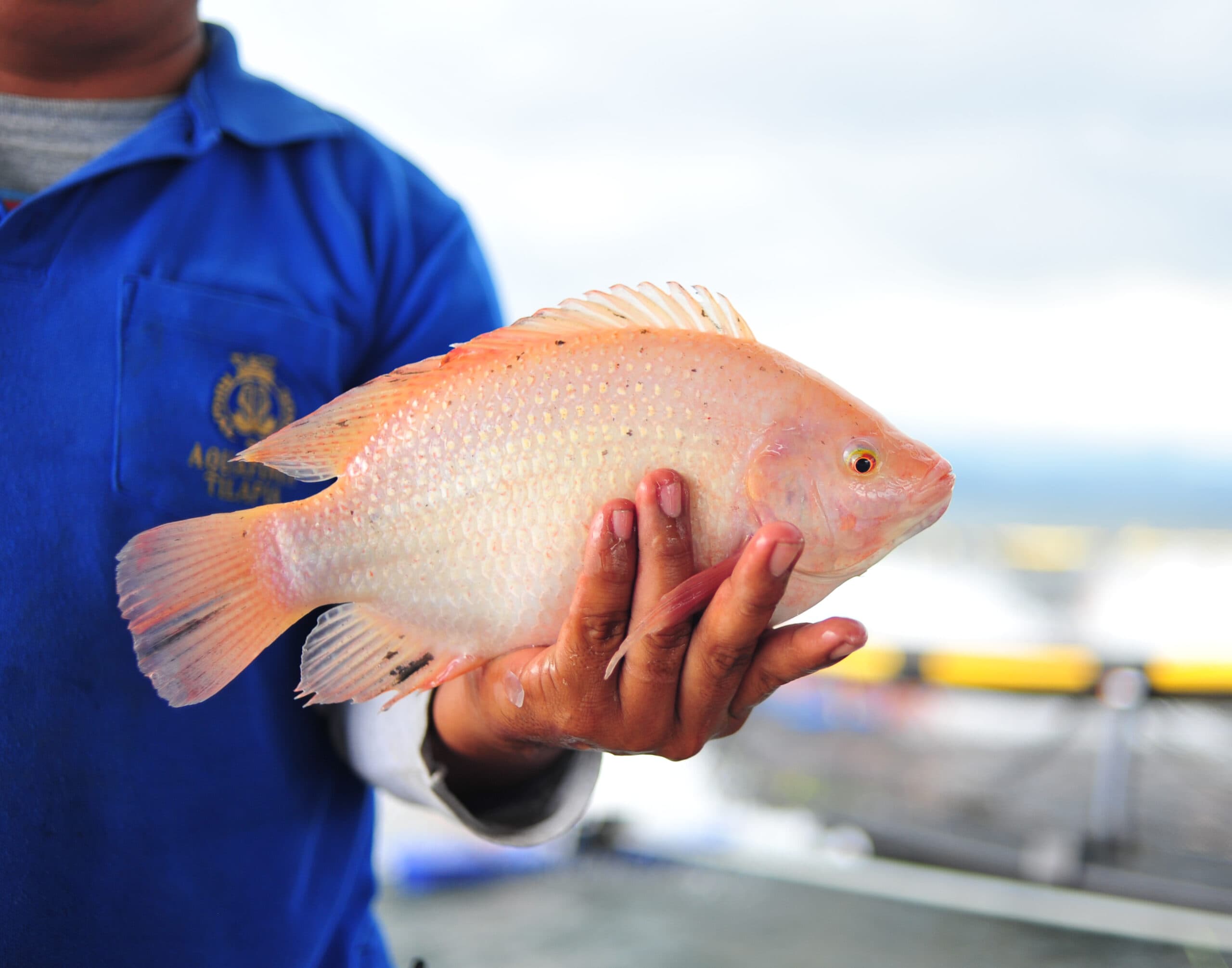
The species most commonly used in modern FAMS deployments is the Four-banded Tiger Barb (Puntius tetrazona), a small, robust freshwater fish approximately 5 centimetres in length. Tiger Barbs are preferred for their hardiness, their consistent and observable behavioural responses to water quality changes, and their adaptability to controlled tank environments. A typical monitoring tank houses 20 fish — a number carefully chosen to balance statistical reliability (reducing false alarms from individual fish mortality due to unrelated causes) with sensitivity to genuine water quality events.
How a Modern Cloud-Based FAMS Works
Today’s state-of-the-art FAMS installations are sophisticated, multi-layered systems that combine physical hardware, edge computing, cloud infrastructure, and advanced analytics. Understanding each component helps illustrate both the complexity and the elegance of the technology.
The On-Site Unit
At each monitoring location, a self-contained FAMS unit houses the fish tank, camera system, water management components, sensors, and computing hardware — all enclosed in a robust stainless steel enclosure rated to operate continuously in outdoor environments with temperatures up to 45°C and humidity up to 90%.
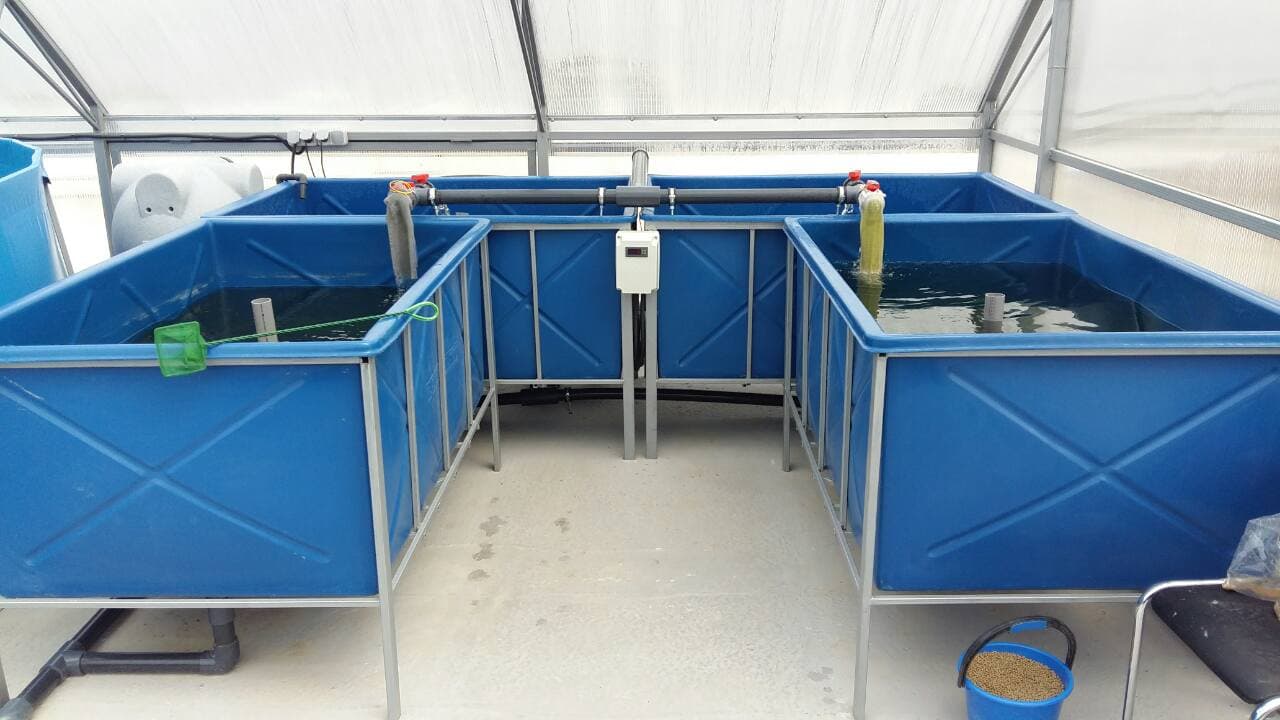
The Fish Tank is not simply a bowl of water. It is a carefully engineered flow-through system designed to maintain optimal conditions for the fish while ensuring the water being monitored is representative of the supply being tested. Water flows continuously through the tank at a minimum rate of 2 litres per minute, maintaining dissolved oxygen levels and removing metabolic waste. The inlet and outlet are positioned at opposite ends to ensure thorough mixing. The tank holds a minimum of 30 litres, providing enough volume to buffer short-term fluctuations while remaining responsive to genuine quality changes.
The De-chlorination System is a critical component that is often overlooked in descriptions of FAMS technology. Municipal water supplies contain chlorine or chloramines — disinfectants that are essential for safe drinking water but lethal to fish at operational concentrations. Before water enters the fish tank, it must be de-chlorinated. Modern FAMS units achieve this through a precision dosing pump that administers sodium thiosulfate — a safe, well-established neutralising agent — at carefully calibrated rates. The system maintains a buffer supply of at least seven days’ worth of de-chlorination agent, ensuring continuous operation even during extended maintenance intervals.
The Total Residual Chlorine (TRC) Sensor monitors chlorine levels in the tank at regular intervals — typically every three minutes. This serves a dual purpose: it confirms that de-chlorination is functioning correctly, and it provides an additional chemical data stream that complements the biological monitoring performed by the fish themselves. TRC readings are transmitted in real time to the cloud dashboard, giving operators full visibility into the chemical state of the monitored water.
The Camera System is the eyes of the FAMS. At minimum, a high-resolution video camera — capable of capturing footage at 800×600 resolution or better at 60 frames per second — is mounted to observe the fish tank under controlled, non-glare lighting conditions. White LED or fluorescent lighting is designed to provide uniform, flicker-free illumination across the entire base of the tank, ensuring consistent image quality for downstream analysis. The camera operates continuously, streaming video to either a local processor or directly to the cloud, where AI algorithms analyse the footage in real time.
The Auto-Sampler Module is activated automatically when a mortality event is detected. Upon a red alert — five or more fish deaths — the system stops the inflow of water and draws a precise 20-litre sample from the centre of the fish tank, avoiding both the inlet and outlet points to ensure the sample is representative of the bulk water chemistry. This water sample is collected in a sealed container within the FAMS unit, ready for laboratory analysis to identify the specific contaminant responsible for the event.
The Auto-Feeder Module ensures that fish are fed on a consistent, scheduled basis without manual intervention. Reliable nutrition is essential for maintaining a healthy fish population — fish that are stressed by hunger are more likely to produce false alerts, while well-nourished fish are robust biological indicators.
The Uninterruptible Power Supply (UPS) ensures continuity of operation during power failures. The UPS provides at least two hours of backup power — enough to sustain operations and trigger an orderly system shutdown if power cannot be restored. A power failure alert is simultaneously transmitted to the cloud monitoring system.
The Alert and Status Indicator System uses a colour-coded LED light visible from a distance, providing at-a-glance status information for on-site personnel:
- Static Green — Normal operation
- Flashing Red — Fish death event (5+ mortalities detected)
- Flashing Yellow — Abnormal fish behaviour detected
- Static Yellow — Power supply failure, operating on UPS
- Flashing Blue — System fault (network, hardware, sensor, camera, or water supply)
- Static Blue — Maintenance mode active
The Remote Terminal Unit (RTU) is the communication backbone of the on-site unit. It transmits data to the cloud at configurable intervals — typically every 10 seconds — over leased line connections, with mobile broadband (5G/4G) available for remote locations. The RTU employs end-to-end encryption (TLS, OPC-UA, and IPSec), stores up to five days of data locally in case of communication failure, and synchronises its clock with GPS signals to millisecond precision for accurate event timestamping.
The Cloud Hosted System (CHS)
All data from on-site FAMS units flows to a centralised Cloud Hosted System (CHS), where it is processed, stored, analysed, and made accessible to authorised users through a web-based dashboard.
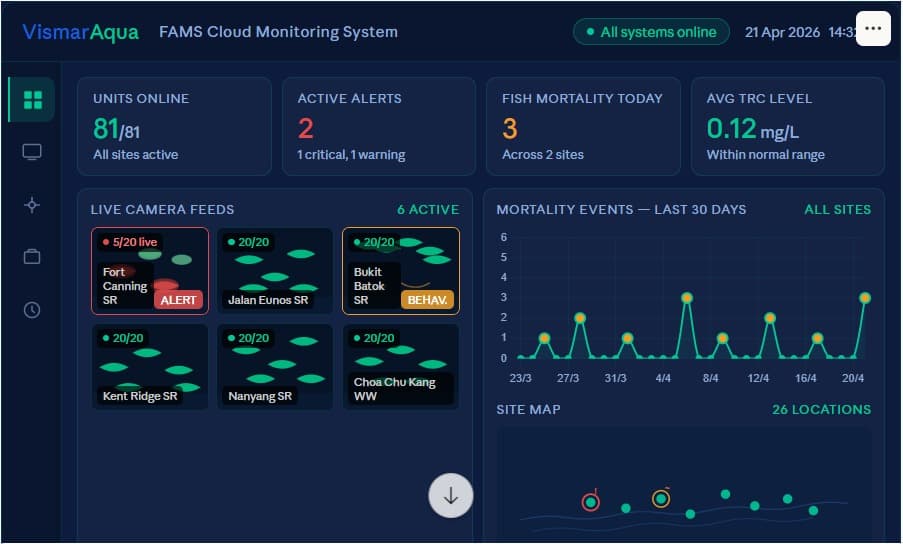
The dashboard provides real-time and historical views of fish counts, mortality events, TRC sensor readings, camera footage, and system alerts. It supports up to 350 concurrent user accounts, is accessible from any device via standard web browsers, and is designed to be fully responsive for mobile use. Alerts are distributed automatically via email and WhatsApp to designated personnel, with site-specific routing ensuring that each alert reaches only the relevant team.
The cloud system also hosts the Video Analytics Module — the AI engine that transforms raw camera footage into actionable intelligence. This is where modern FAMS technology takes a decisive leap forward.
The Role of AI in Modern FAMS: From Observation to Intelligence
Traditional FAMS systems relied on relatively simple motion detection or pixel-change algorithms to identify fish deaths or unusual behaviour. While effective in controlled conditions, these approaches struggled with the complexity and variability of real-world fish behaviour, lighting changes, water turbidity, and camera angles. False positives were a persistent challenge, eroding operator confidence and increasing the burden of manual oversight.
Artificial intelligence — specifically deep learning-based computer vision — changes this fundamentally.
AI-Powered Fish Detection and Tracking
Modern AI models can be trained to identify and track individual fish within a tank with remarkable accuracy, even under challenging conditions. Rather than simply detecting motion or pixel changes, these models understand what a fish looks like, how it moves, and what constitutes normal versus abnormal behaviour. They can count live fish, identify dead fish by their characteristic posture and lack of movement, and track the positions and velocities of individual animals over time.
State-of-the-art FAMS AI is expected to achieve at least 90% precision and 90% recall — meaning that fewer than one in ten genuine events goes undetected, and fewer than one in ten alerts is a false alarm. This level of performance requires sophisticated model architectures, careful training data curation, and continuous fine-tuning based on real-world deployment feedback.
Mortality Detection
The primary AI task in a FAMS is mortality detection: determining when a fish has died and counting the cumulative number of dead fish in the tank. This is more complex than it sounds. Dead fish do not always float immediately — they may sink, list to one side, or become entangled with tank structures. They may be partially obscured by other fish. Water surface reflections and bubbles can create visual artefacts that confuse simpler algorithms.
Deep learning models address these challenges by learning from large datasets of labelled fish imagery across a wide variety of conditions. They develop robust representations of “dead fish” that generalise across different tank configurations, lighting conditions, fish sizes, and water clarity levels. The system must detect five or more dead fish and trigger an alert within ten minutes of the event — a demanding real-time performance requirement that modern AI comfortably meets.
Behavioural Anomaly Detection
Beyond mortality, the most sophisticated FAMS deployments now include detection of abnormal fish behaviour — subtle changes in swimming patterns that may indicate sub-lethal contamination or early-stage stress before any fish die. This is perhaps the most powerful capability that AI brings to biomonitoring, because it extends the warning window significantly.
Three key behavioural anomalies are particularly significant:
Fish Sudden Dispersal — When fish that normally school together suddenly scatter to opposite corners of the tank, this can indicate a sudden chemical shock. Fish instinctively flee what they perceive as a threat, and a rapid dispersal event often precedes mortality if the contaminant concentration is high enough.
Swimming Speed Variations — Sudden increases in swimming speed, erratic trajectories, or fish moving rapidly from one end of the tank to the other can indicate neurological effects of certain contaminants, particularly organophosphates and other neurotoxic substances. AI models can measure and analyse the velocity and trajectory of individual fish, detecting these patterns with precision that no human observer could maintain continuously.
Grouping Behaviour Changes — Abnormal clustering — fish huddling tightly together in corners or at the surface — can indicate hypoxia, chemical stress, or other environmental disturbances. AI models can quantify the spatial distribution of fish across the tank over time, flagging deviations from baseline clustering patterns.
Each of these behaviours, when detected by the AI, triggers an optional alert to operators — giving water utility teams a potential early warning signal that allows investigation and intervention before a full mortality event occurs.
Vismar Aqua: Pushing FAMS Technology Further with AI
At Vismar Aqua, we are not simply implementing the current state of the art in Fish Activity Monitoring. We are actively developing the next generation of FAMS intelligence — AI solutions that push the boundaries of what automated biomonitoring can achieve.
Edge-Optimised AI for Real-Time On-Site Processing
One of the key architectural choices in modern FAMS deployments is where AI processing takes place. Cloud-based processing offers scalability and centralised management, but introduces latency that may be critical in rapid-response scenarios. Vismar Aqua’s AI software is designed for edge deployment on platforms such as the NVIDIA Jetson Orin Nano — a compact, energy-efficient AI compute module that brings GPU-accelerated deep learning directly to the on-site FAMS unit.
This means that fish mortality and behaviour analysis can run locally, at the unit, with sub-second response times — completely independent of network connectivity. When a critical event occurs, the local system can trigger immediate alerts, activate the auto-sampler, and halt water inflow without waiting for a round-trip to the cloud. The cloud receives the event data and imagery for logging, reporting, and secondary analysis — but the first line of response is local, fast, and reliable.
Continuous Model Improvement Through Federated Learning
One of the persistent challenges in deploying AI models across a large network of monitoring sites is that conditions vary. Different locations have different lighting, different water turbidities, different fish populations at different life stages, and different background activity patterns. A model trained on data from one site may not perform optimally at another.
Vismar Aqua’s approach addresses this through a federated learning framework — an approach in which AI models improve continuously based on real-world data from all deployed units, without any sensitive operational data ever leaving the secure environment. Local models improve from local data; global model improvements are shared across the network. Over time, the AI becomes increasingly accurate and site-aware, reducing false positive rates and improving sensitivity to genuine events.
Multi-Modal Sensor Fusion
Fish behaviour is the primary signal in a FAMS — but it is not the only one. Water temperature, pH, dissolved oxygen, turbidity, and TRC levels all provide complementary information that can significantly improve the precision of event detection and classification.
Vismar Aqua’s AI platform is built around multi-modal sensor fusion — the ability to combine video analytics with real-time sensor data streams to make more accurate, confident decisions. When the camera detects a potential mortality event, the AI simultaneously interrogates the TRC sensor readings, flow rate data, and historical baseline metrics to assess the likelihood that the event is genuine versus a false alarm caused by a fish dying of natural causes or a temporary equipment anomaly. This fusion of data streams dramatically reduces false positive rates while maintaining or improving sensitivity to genuine contamination events.
Predictive Maintenance and System Health Monitoring
Beyond water quality monitoring, Vismar Aqua’s AI capabilities extend to the health of the FAMS system itself. By continuously analysing sensor readings, camera image quality metrics, communication latency, and historical maintenance records, our AI can predict component failures before they occur — flagging degrading camera performance, declining de-chlorination efficiency, or RTU communication instability before these issues cause system downtime or missed events.
This predictive maintenance capability is especially valuable in large-scale FAMS networks spanning dozens of locations, where the logistics of routine maintenance visits are substantial. By prioritising maintenance resources based on AI-predicted risk, water utilities can significantly reduce both operational costs and system downtime.
Advanced Event Classification and Root Cause Analysis
When a mortality or behavioural event is detected, the question of “what happened?” is just as important as “that something happened.” Was the event caused by a chemical contamination? A mechanical failure in the de-chlorination system? A natural fish disease? Equipment malfunction?
Vismar Aqua’s AI platform includes an event classification engine that analyses the pattern of the event — the speed of onset, the number and distribution of affected fish, simultaneous sensor readings, the time of day, and historical baseline comparisons — to provide operators with a ranked list of probable causes alongside each alert. This turns a raw alarm into actionable intelligence, helping water utility teams prioritise their response and direct their laboratory analysis most effectively.
Scalable Cloud Architecture for Enterprise FAMS Networks
For water utilities operating FAMS networks across dozens or hundreds of locations, scalability is paramount. Vismar Aqua’s cloud integration layer is built on a microservices architecture that scales horizontally — adding new monitoring units to the network requires no changes to the core platform, and processing capacity scales automatically with demand.
Our API-first design means that FAMS data can be integrated with existing Supervisory Control and Data Acquisition (SCADA) systems, asset management platforms, and enterprise data warehouses — breaking down the silos that often exist between different monitoring technologies and giving water utility operations teams a unified picture of network health.
FAMS in the Context of a Comprehensive Water Quality Strategy
It is important to understand where FAMS fits within the broader ecosystem of water quality monitoring. Fish Activity Monitoring Systems are not a replacement for chemical analysis, physical sensors, or laboratory testing — they are a powerful complement to these methods.
The value of FAMS lies specifically in their ability to provide a broad-spectrum, continuous, real-time biological signal that responds to the holistic toxicological state of water, including unknown or novel contaminants for which no sensor has been calibrated. They serve as the first line of detection — a biological tripwire that alerts operators to investigate further, at which point chemical analysis and laboratory testing identify the specific cause.
In an integrated water quality monitoring strategy, FAMS works alongside:
- Online chemical sensors (chlorine, pH, turbidity, conductivity, dissolved oxygen) for continuous measurement of specific parameters
- Automated laboratory analysers for periodic high-precision chemical profiling
- SCADA systems for real-time network-wide visibility and control
- Manual sampling and laboratory testing for detailed event investigation and regulatory compliance
The unique contribution of FAMS to this ecosystem is the biological dimension — the living, sensing, responding fish that experience the water as any aquatic organism would, and whose health and behaviour constitute a direct measure of the water’s safety for life.
The Future of FAMS: Where the Technology Is Heading
The trajectory of Fish Activity Monitoring Systems points toward increasingly intelligent, autonomous, and integrated systems. Several developments are shaping the future of this technology.
Higher-resolution imaging and 3D tracking will enable more precise behavioural analysis, including the ability to track individual fish in three dimensions and detect even subtler deviations from normal behaviour patterns.
Integration with environmental DNA (eDNA) analysis may eventually allow automatic molecular characterisation of contaminants directly from the water sampled by the auto-sampler module, closing the loop from detection to identification within a single automated workflow.
Wider species diversity in monitoring tanks — using panels of multiple species with different sensitivity profiles — may improve the specificity of detection for different contaminant classes.
Digital twin modelling — creating virtual simulations of fish tank environments calibrated to real-world data — will enable AI models to be trained and validated in simulation before deployment, accelerating the development cycle and improving out-of-the-box performance.
AI-driven adaptive alerting — systems that learn the specific operational context of each installation, adjusting alert thresholds and routing based on time of day, seasonal patterns, and historical event rates — will further reduce the operational burden on water utility teams.
At Vismar Aqua, we are actively working on all of these frontiers. Our mission is to make biomonitoring not just more automated, but more intelligent — transforming FAMS from a passive alarm system into an active, learning, predictive water quality intelligence platform.
Conclusion: The Biological Intelligence That Protects Our Water
Fish Activity Monitoring Systems represent a remarkable convergence of biology, engineering, and artificial intelligence in service of one of humanity’s most fundamental needs: safe water. By harnessing the natural sensitivity of fish to water quality changes, and amplifying that sensitivity with the computational power of modern AI, FAMS technology provides water utilities with a level of protection that no purely chemical or physical monitoring system can match.
The fish in the tank are not merely animals — they are sensors, calibrated by millions of years of evolution to respond to the same chemical environment that humans depend on for survival. FAMS systems make their responses legible, quantifiable, and actionable at scale.
Vismar Aqua is at the forefront of this transformation. Our AI-powered FAMS solutions deliver the precision, reliability, scalability, and intelligence that modern water infrastructure demands — helping utilities protect public health, optimise operations, and build water systems that are genuinely fit for the future.
Interested in learning how Vismar Aqua’s AI solutions can enhance your water quality monitoring infrastructure? Contact us to discuss how we can tailor our FAMS technology to your specific operational environment.